
Creating compelling and educational science videos can be challenging, especially when aiming to engage diverse audiences. Leveraging AI technology in this process not only simplifies video production but also enhances the learning experience.
As educators and content creators, discovering how to use AI for science education videos offers innovative ways to deliver content. The integration of AI tools allows for more engaging, interactive, and personalized learning experiences.
What is AI's Role in Science Education?
Artificial Intelligence has become a pivotal element in transforming educational content delivery. By understanding patterns in data and personalizing learning experiences, AI helps educators tailor science content to individual learning paces and preferences.
In 2026, AI-driven platforms like Vexub provide creators with the ability to produce videos that are not only educational but also engaging and adaptive to learners' needs. This technology analyzes learner interactions and adjusts content delivery accordingly.
Steps to Create Science Education Videos with AI
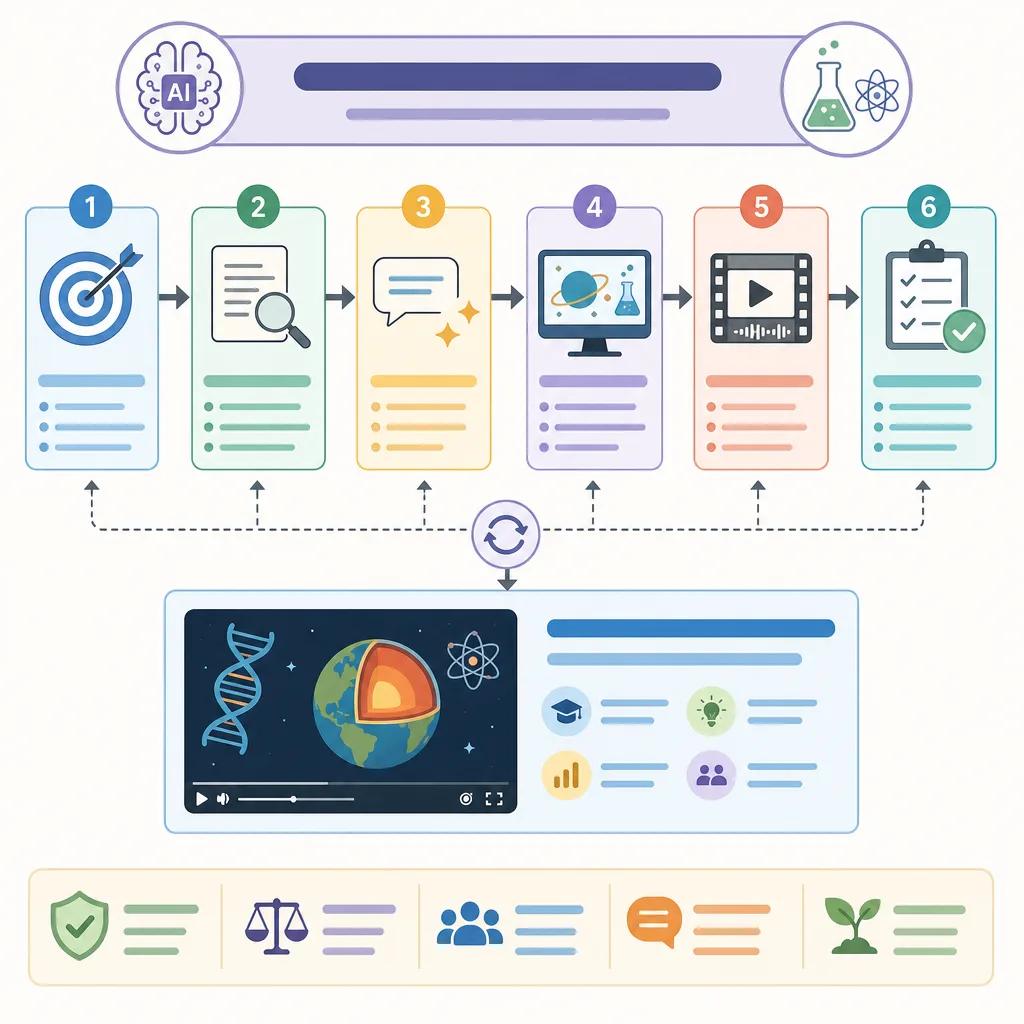
Creating science education videos using AI involves several steps, each designed to maximize engagement and educational value. Here’s a step-by-step guide:
Define Your Educational Goals: Start by outlining the key messages and learning objectives for your video.
Choose an AI Platform: Select a platform like Vexub that offers robust tools for video creation and AI integration.
Script and Storyboard: Use AI tools to assist in scripting and storyboarding, ensuring content is both accurate and engaging.
Customize Content with AI: Apply AI features to tailor your content to various learning styles and paces.
Integrating these steps enhances the impact and reach of your educational videos, making complex science topics more accessible.
Enhancing Engagement with AI Features
AI technologies offer multiple features that can significantly enhance viewer engagement in science education videos. Some of these include:
Interactive Quizzes: Implement AI-driven quizzes that adapt based on viewer responses.
Real-time Feedback: Use AI to provide immediate feedback, helping learners correct misconceptions as they occur.
Visual and Audio Enhancements: Leverage AI to improve video quality with advanced visual effects and audio clarity.
These features not only maintain viewer interest but also enhance the educational value of your videos.
Creating Interactive Elements in Videos
Using AI to Personalize Learning
Personalization is a key benefit of using AI in educational videos. AI can dynamically adjust content to better suit the learning pace and style of individual viewers. This personalized approach ensures that each learner gains the most from the material presented.
Integrating AI-Powered Assessments
Incorporating AI-powered assessments in your videos can provide valuable insights into learner progress. These assessments adapt to the learner’s understanding, offering a tailored educational experience.
Create videos like this with AI
Script, voiceover, images and subtitles — automated in minutes.
Benefits of Using AI in Science Education Videos
Utilizing AI in your science education videos offers numerous benefits, including:
Increased Engagement: AI tools make videos more interactive and engaging, holding learners’ attention longer.
Enhanced Learning Outcomes: By tailoring content to individual needs, AI improves comprehension and retention.
Efficiency in Production: AI simplifies the video creation process, reducing time and resource investment.
Platforms like Vexub play a crucial role in providing these benefits, making it easier for educators to focus on content quality.
Choosing the Right AI Tools for Video Creation
Selecting the appropriate AI tools is crucial for successful video production. Consider the following factors when choosing your AI platform:
Ease of Use: Opt for platforms with intuitive interfaces, such as Vexub, which streamline the video creation process.
Feature Set: Ensure the platform offers comprehensive features like AI-driven analytics, interactive elements, and customization options.
Cost and Support: Evaluate the cost-effectiveness and availability of customer support for the platform.
Choosing the right tools not only enhances video quality but also ensures a smooth production process.
Future Trends in AI and Science Education
Looking ahead, the role of AI in science education videos is expected to expand. Future trends may include:
Advanced Personalization: Further advancements in AI will allow for even more customized learning experiences.
Increased Interactivity: AI will enable creators to incorporate more interactive elements, enhancing learner engagement.
Integration with Other Technologies: AI will increasingly integrate with VR and AR, offering immersive educational experiences.
Staying ahead of these trends will be crucial for educators and content creators looking to maximize the impact of their science education videos.
Explore more about ", AI video tools for education, " to keep abreast of the latest innovations.