
Navigating the world of AI video content can be daunting, but understanding best practices for AI video SEO is crucial for maximizing visibility. With the rise of AI-driven technology, creating engaging video content is just the beginning; optimizing it for search engines ensures your hard work reaches the right audience.
In 2026, the strategies for effective video SEO have evolved, heavily influenced by advancements in AI and machine learning. These technologies offer powerful tools for enhancing video content, but they also require updated SEO tactics to maintain a competitive edge. Let’s dive into the essential techniques you need to know.
Understanding AI Video SEO Basics
SEO for AI videos involves specific techniques that cater to both search engine algorithms and user engagement. As AI technologies become more prevalent, search engines like Google and YouTube have adapted, requiring new approaches to ensure your content ranks high.
Start by focusing on video metadata, which includes titles, descriptions, and tags. These elements should be optimized with relevant keywords, such as AI video content and optimize AI videos. Using AI tools can streamline this process, allowing for more precise keyword integration.
Another crucial aspect is video transcriptions. Providing a text version of your video not only improves accessibility but also enhances SEO by allowing search engines to better understand your content. Tools like Vexub can automate transcription, saving you time and effort.
Leveraging AI for Enhanced Video Engagement
AI tools offer numerous opportunities to boost engagement. By analyzing viewer behavior, AI can suggest content adjustments that increase watch time and interaction. This not only improves viewer satisfaction but also signals to search engines that your content is valuable.
Consider using AI to personalize content recommendations. By tailoring video suggestions based on viewer history and preferences, you can increase engagement and retention, which are critical factors for SEO success.
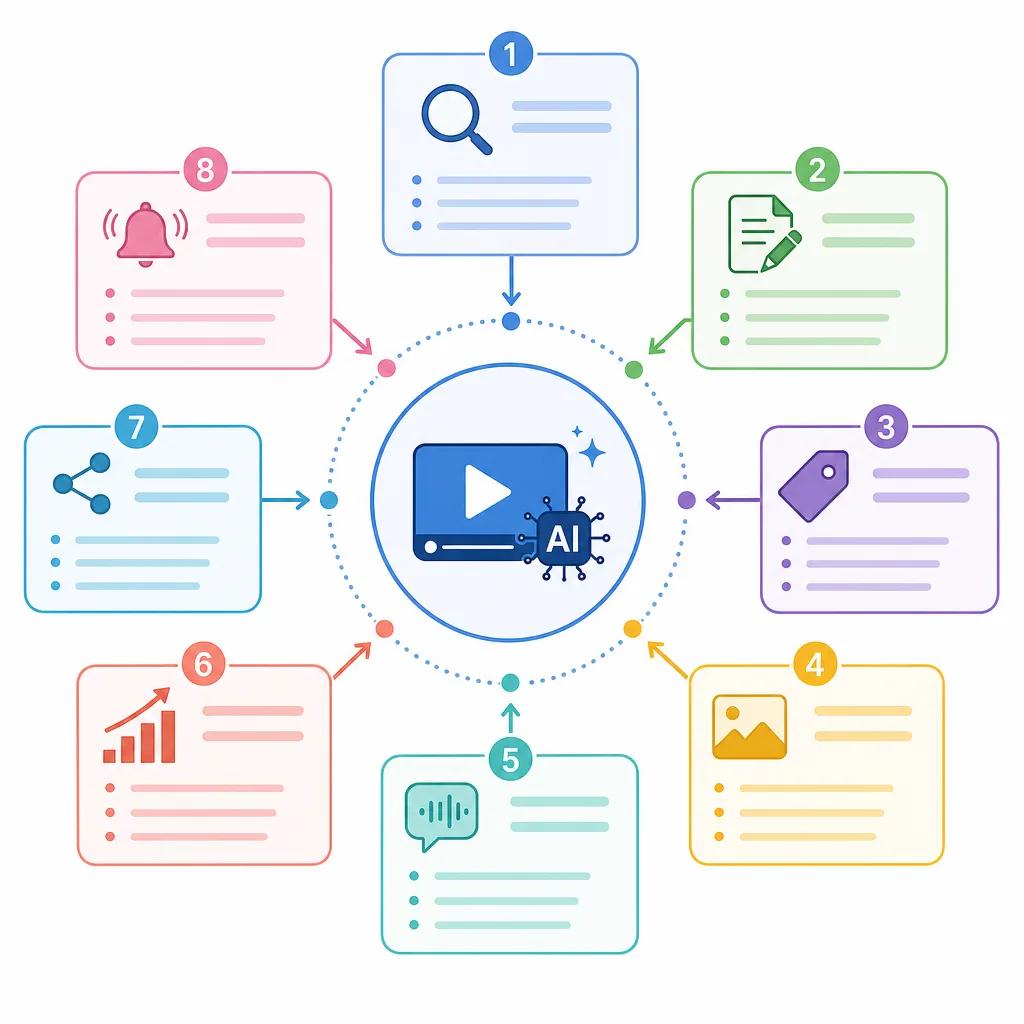
Tools like Vexub provide insights into audience behavior, helping you understand which parts of your video are most engaging. Use this data to refine future content strategies and optimize current videos for better SEO performance.
Optimizing Video Content for AI Search Engines
Search engines are increasingly using AI to interpret and rank video content. To optimize your videos for these AI-driven engines, focus on high-quality visuals and audio. Clear, professional-quality production enhances user experience and signals to AI that your content is authoritative.
Additionally, ensure your video content is mobile-friendly. With a significant portion of video consumption happening on mobile devices, optimizing for mobile is essential for reaching a broader audience.
Use AI tools to enhance video quality and ensure fast loading times, both of which are crucial for maintaining viewer interest and improving SEO.
Integrating AI Video Content with Other SEO Strategies
A holistic approach to video SEO includes integrating your AI video content with broader SEO strategies. This means ensuring your website is optimized for search engines and that video content is seamlessly embedded within your site.
Incorporate ", bold("related keywords"), " throughout your website to create a cohesive SEO strategy that supports both text and video content. Internal links, such as those to articles like ", how to use AI in real estate marketing, " and ", creating animated explainer videos with AI, ", can enhance the overall effectiveness of your SEO efforts.
Moreover, utilize AI analytics tools to track how your videos perform across different platforms. By understanding where your audience engages most, you can tailor your content and SEO strategies accordingly.
Effective Use of Thumbnails and Titles
Thumbnails and titles are often the first elements users notice about your video. Crafting compelling and relevant thumbnails and titles is essential for attracting clicks and improving SEO.
Use AI to test different thumbnail designs and title variations to see which combinations generate the highest engagement. A/B testing can provide valuable insights into user preferences and help refine your approach.
Remember, a good thumbnail should be visually appealing and clearly convey the video's content. Similarly, your title should include relevant keywords and be descriptive enough to entice viewers.
Tracking and Analyzing Video Performance
Analyzing video performance is crucial for understanding the effectiveness of your SEO strategies. Use AI-powered analytics tools to monitor key metrics such as watch time, click-through rates, and viewer demographics.
Platforms like Vexub offer comprehensive analytics dashboards that provide insights into how your videos are performing across different channels. Use this data to identify trends and make informed decisions about future content.
Remember, the goal of video SEO is not only to increase visibility but also to enhance viewer engagement and retention. By consistently analyzing performance data, you can refine your strategies and achieve better results.

Conclusion: Staying Ahead with AI Video SEO
As AI continues to evolve, staying updated with the latest best practices for AI video SEO is essential for maintaining your competitive edge. By leveraging AI tools and techniques, you can optimize your video content to achieve higher search rankings and better viewer engagement.
Platforms like Vexub can assist in automating and enhancing your video SEO efforts, ensuring you stay ahead in the rapidly changing digital landscape. By integrating these best practices into your strategy, you position your content for success in 2026 and beyond.
Create videos like this with AI
Script, voiceover, images and subtitles — automated in minutes.