
Imagine a classroom where content is dynamically generated to cater to each student's learning pace and style. As we step into 2026, AI video technologies are transforming educational landscapes, making personalized learning experiences more accessible than ever before. But what are the specific trends shaping this transformation?
Educators are increasingly leveraging AI-driven video tools to not only deliver content but also to enhance student engagement and retention. From automated content generation to interactive learning modules, the possibilities are expanding rapidly. This article delves into the most significant AI video trends for education in 2026 and how they promise to revolutionize learning environments.
Personalized Learning Through AI Video
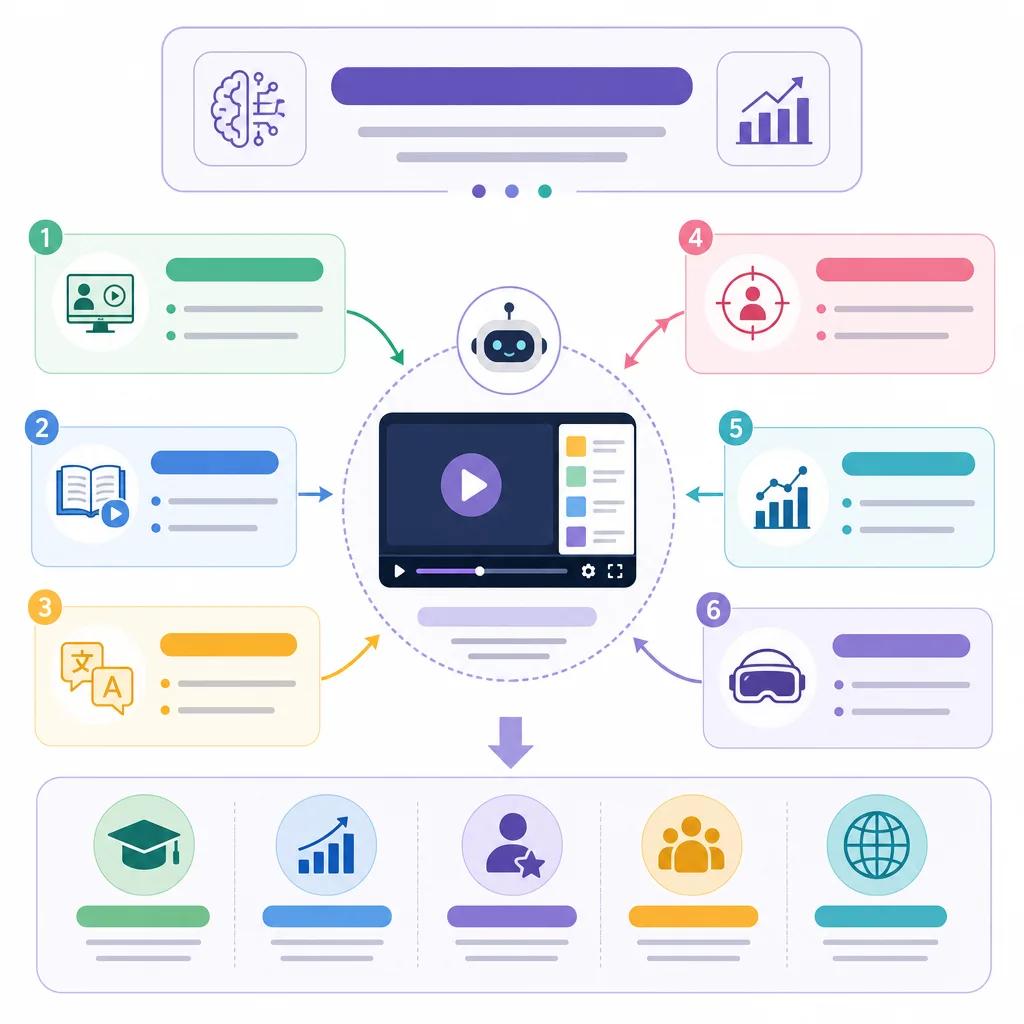
Personalization is at the forefront of educational innovation, with AI video technologies enabling tailored content delivery. These tools analyze student performance data to adjust video content in real-time, providing a customized learning path for each student. This trend is crucial for addressing diverse learning needs and optimizing educational outcomes.
Platforms like Vexub are pioneering in this space, offering features that allow educators to create personalized explainer videos. Such tools are capable of adapting the video's pace and complexity based on the viewer's understanding, thereby enhancing the learning experience.
AI-Driven Content Creation
AI is revolutionizing how educational content is produced, making it faster and more efficient. AI-driven tools can generate video content from textual data, allowing educators to create comprehensive learning materials with minimal effort. This capability not only saves time but also ensures content consistency across different subjects and modules.
For example, by using Vexub's advanced AI capabilities, educators can transform lesson plans into engaging video content, complete with animations and voiceovers. This trend reduces the workload on teachers and enables them to focus more on student interaction and support.
Interactive and Immersive Learning Experiences
Interactive videos are becoming a staple in education, thanks to AI integrations. These videos allow students to engage with the content actively, making learning more immersive and effective. Features such as quizzes, branching scenarios, and clickable elements are enhancing student engagement.
The use of AI in creating such interactive experiences is exemplified by platforms that offer drag-and-drop functionalities to build interactive modules. Vexub, for instance, provides tools that enable the creation of scenarios where students can explore different outcomes based on their choices, thereby fostering critical thinking.
Create videos like this with AI
Script, voiceover, images and subtitles — automated in minutes.
Enhanced Accessibility and Inclusivity
AI video tools are significantly improving accessibility in education. Automated captioning, translation, and voiceover features ensure that educational content reaches a broader audience, including those with disabilities. This inclusivity is vital for creating equitable learning environments.
In 2026, we see more educational institutions adopting AI solutions that support multilingual education, helping students learn in their native languages. Vexub's platform, for example, allows for seamless integration of multiple languages into video content, making learning accessible to everyone.

AI Video Analytics for Improved Learning Outcomes
The use of AI in video analytics is providing educators with valuable insights into student engagement and learning patterns. These analytics help in understanding how students interact with video content, enabling educators to refine their teaching strategies.
By analyzing metrics such as view duration, interaction rates, and quiz scores, educators can identify areas where students struggle and adapt their content accordingly. Vexub's analytics tools offer detailed reports that help educators make data-driven decisions to enhance learning outcomes.
Ethical Considerations and Challenges
While the benefits of AI in education are clear, it is also essential to consider the ethical implications. Issues such as data privacy, algorithmic bias, and the digital divide must be addressed to ensure that AI tools are used responsibly.
Educators and developers must collaborate to create transparent AI systems that prioritize student data protection. Additionally, efforts must be made to ensure equitable access to AI technologies, preventing any exacerbation of existing educational inequalities.
The Future of AI Video in Education
As we look towards the future, AI video technologies will continue to evolve, offering even more sophisticated tools for educators. The trends discussed here are just the beginning, with ongoing advancements promising to further enhance personalized, interactive, and accessible learning experiences.
For educators looking to stay ahead, platforms like Vexub provide the tools and resources necessary to integrate AI video technologies into their teaching. By embracing these trends, you can ensure that your educational practices remain relevant and effective in the rapidly changing educational landscape.
To learn more about creating educational explainer videos with AI, visit our detailed guide on how to create educational explainer videos. Additionally, if you're interested in comparing AI video platforms, check out our top AI video platforms comparison for 2026.