Music educators face unique challenges in creating engaging and interactive content for their students. With advancements in artificial intelligence, you can now access a variety of AI video tools that enhance the learning experience, making it both more interactive and accessible.
AI video tools for music education have emerged as invaluable assets, offering features such as automatic transcription, visual accompaniment generation, and personalized learning paths. In this article, we explore how these tools are transforming the landscape of music education in 2026, providing you with insights on the best tools available.
What Are AI Video Tools for Music Education?
AI video tools for music education refer to software solutions that leverage artificial intelligence to create, edit, and enhance video content specifically designed for music teaching. These tools help educators produce high-quality content without requiring extensive technical expertise.
Tools like Vexub offer functionalities such as automatic lyric synchronization, real-time feedback on musical performance, and adaptive learning modules that cater to individual student needs. By integrating AI into music education, these tools help bridge the gap between traditional teaching methods and modern technological advancements.
Benefits of Using AI in Music Education
The incorporation of AI video tools into music education offers several benefits. Firstly, these tools can significantly reduce the time and effort required to create engaging educational videos. Automation features streamline the video creation process, allowing educators to focus more on teaching.
Secondly, AI tools enhance learning by providing personalized feedback and adaptive learning paths. For example, AI can analyze a student's performance and offer tailored exercises to improve specific skills. This personalized approach ensures that each student receives the attention they need to succeed.
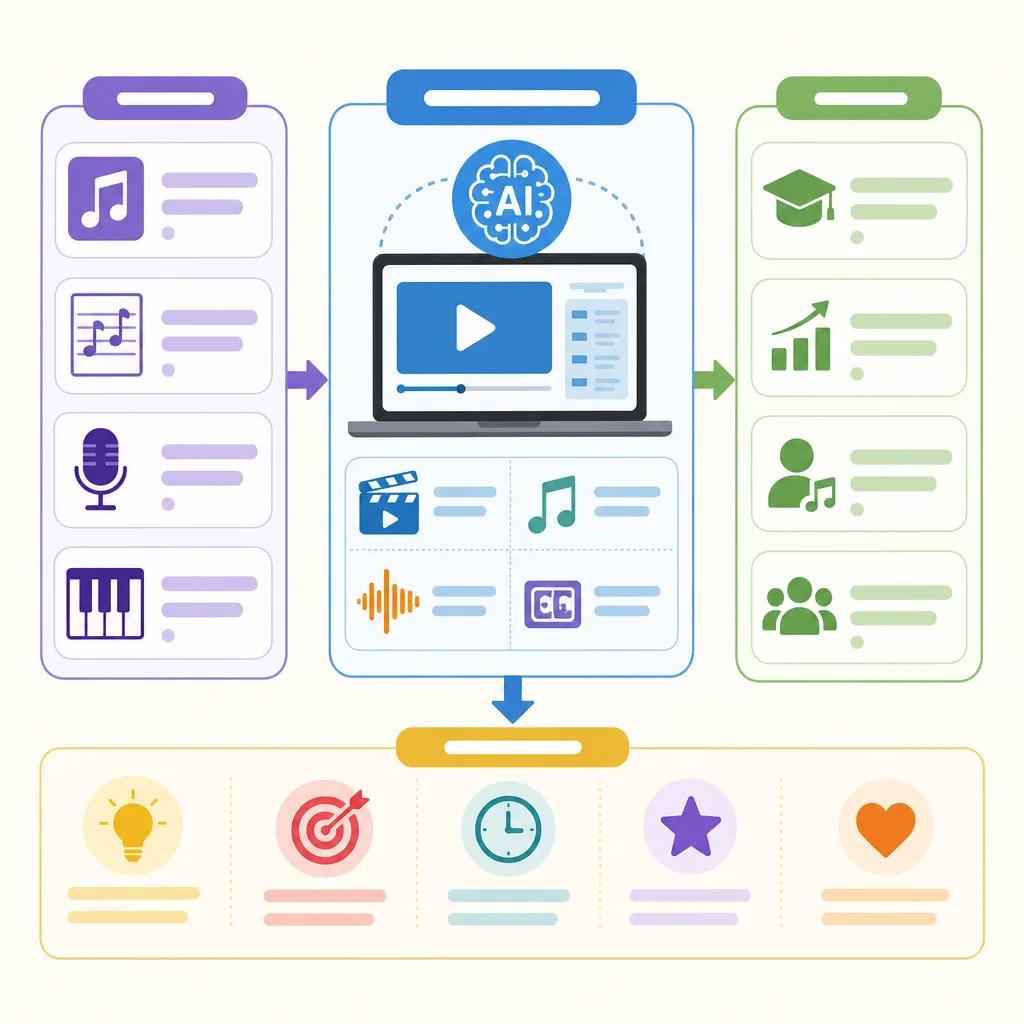
Lastly, AI tools can facilitate collaboration and interaction among students, making learning more communal and engaging. By using platforms that support interactive features, students can participate in music education more dynamically, fostering a sense of community and shared learning experience.
Top AI Tools for Music Educators in 2026
Vexub
Vexub stands out as a premier choice for music educators looking to integrate AI into their teaching strategies. It offers a comprehensive suite of features tailored to the needs of music education, including automated editing, customizable templates, and interactive tutorials.
Automated transcription and captioning
Interactive learning modules
Customizable video templates
By using Vexub, educators can easily create professional-grade videos that engage students and enhance their learning experience. Learn more about how to use these features in our article on ", best practices for AI educational content, ".
Suno AI
Suno AI is another tool that has gained popularity among music educators. Known for its powerful music video generation capabilities, Suno AI allows educators to create visually appealing videos with synchronized music and lyrics. Its intuitive interface makes it accessible even to those with limited technical skills.
AI-driven music video creation
Real-time lyric synchronization
User-friendly interface
With Suno AI, you can produce high-quality educational videos that captivate your students' attention and enhance their learning experience. This tool is especially useful for creating engaging videos for online platforms.
Create videos like this with AI
Script, voiceover, images and subtitles — automated in minutes.
Integrating AI Tools into Your Curriculum
Successfully integrating AI video tools into your music curriculum requires careful planning and execution. Start by identifying the specific needs of your students and the learning objectives you wish to achieve. This will help you select the tools that best fit your educational goals.
Training sessions can help educators become familiar with the new tools and features. Most AI platforms offer comprehensive tutorials and support to help you get started. For instance, Vexub provides extensive resources to ensure you make the most of its features in your teaching.
Consider starting with a pilot program to test the effectiveness of AI tools in your classes. This allows you to gather feedback from students and make necessary adjustments before implementing the tools on a larger scale. Explore how AI tools can enhance your educational content by reading our article on ", creating engaging vlogs with AI tools, ".
Future of AI in Music Education
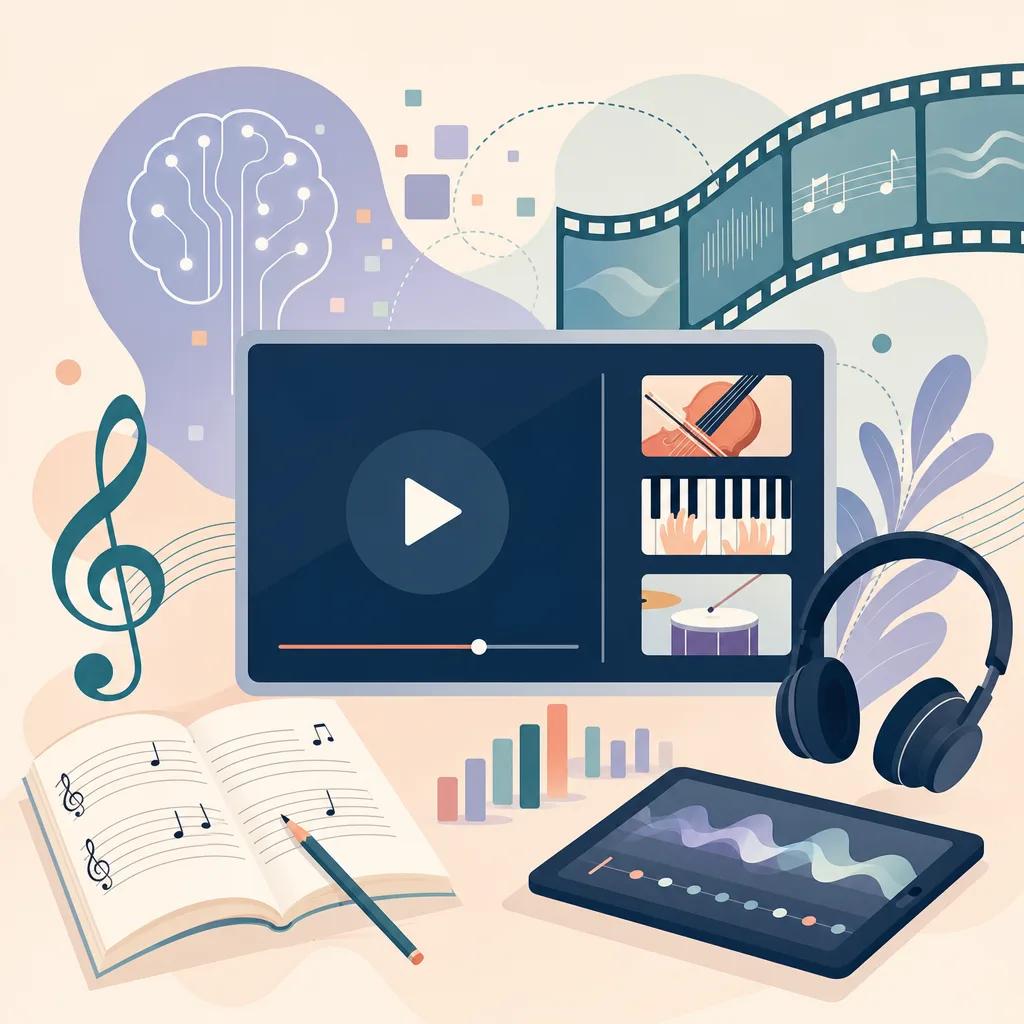
The future of AI in music education looks promising, with continuous advancements in technology paving the way for new possibilities. As AI tools become more sophisticated, they will offer even more tailored and immersive learning experiences.
In the coming years, expect to see AI tools that offer real-time collaboration features, allowing students to work together on musical projects regardless of their physical location. Additionally, AI could provide even more personalized learning paths, adapting to each student's pace and style of learning.
As you explore the potential of AI in music education, consider staying updated with the latest trends and innovations. Platforms like Vexub are at the forefront of this evolution, continually enhancing their offerings to meet the needs of educators and students alike. Dive deeper into future possibilities by checking out our article on ", future AI video predictions for 2027, ".