
Teaching in 2026 presents new challenges and opportunities, particularly with the integration of AI in the classroom. As a teacher, you can leverage AI video content strategies to create more engaging and interactive lessons that captivate students and enhance learning outcomes.
The adoption of AI tools allows you to craft personalized educational experiences effortlessly. These tools not only save time but also enable you to focus on what truly matters: teaching. Let's explore the best strategies to create AI-driven video content that transforms your classroom.
Understanding AI Video Content Strategies
AI video content strategies involve utilizing artificial intelligence to automate and enhance video creation processes. This includes generating video scripts, editing, and even personalizing content for different student groups. By adopting these strategies, teachers can produce high-quality educational videos with minimal effort.
Moreover, AI offers a unique opportunity to tailor content delivery to diverse learning styles. For instance, AI can help create multiple versions of a video to cater to auditory, visual, and kinesthetic learners, ensuring that each student receives information in the most effective way.
Incorporating AI into your teaching practice can seem daunting at first. However, with tools like Vexub, you can simplify the process, making it accessible even if you're not tech-savvy. The key is to start small and gradually integrate more complex features as you become comfortable.
How to Create Effective Teaching Videos with AI
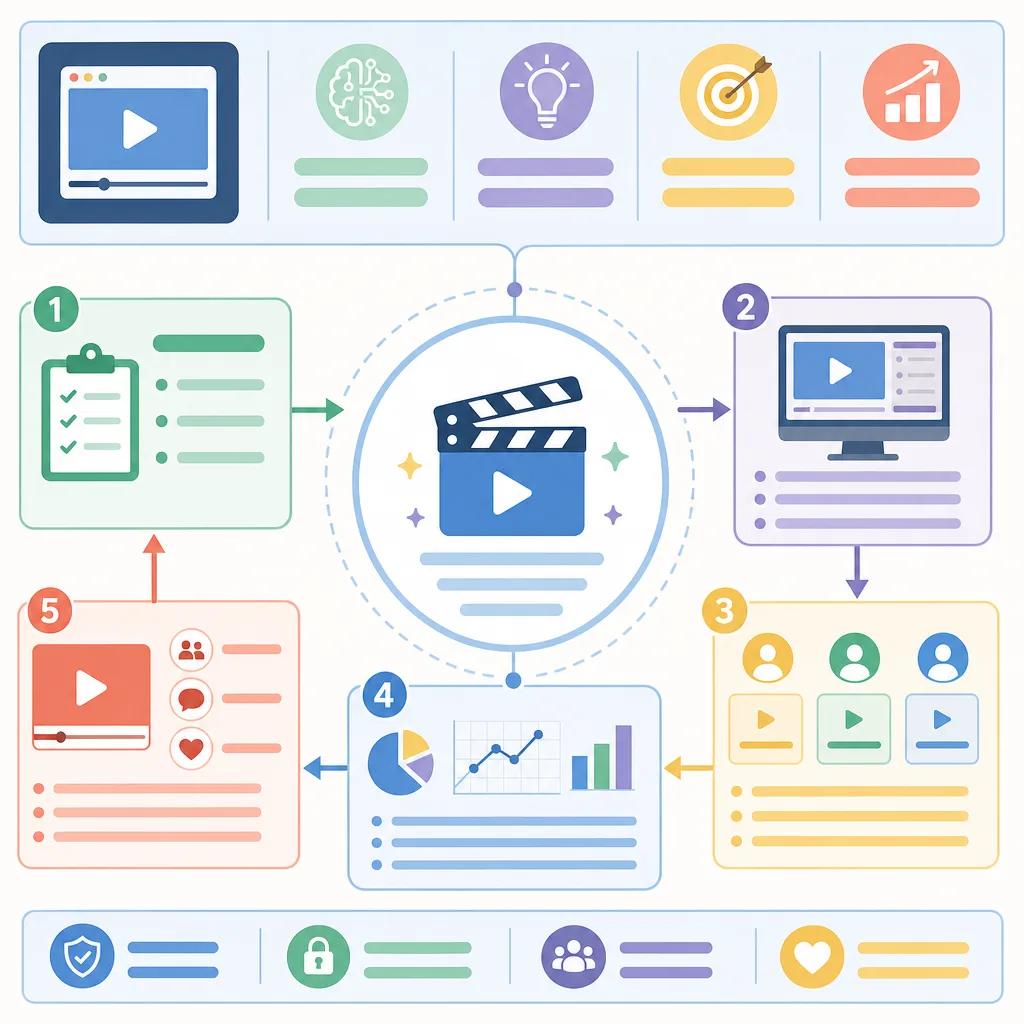
Creating effective teaching videos with AI begins with choosing the right tools. AI platforms like Vexub provide a comprehensive suite of features that streamline the video creation process. They offer pre-built templates, automated editing, and voiceover capabilities that reduce the time and effort required.
Start by identifying the learning objectives you want to achieve with your video. Use AI to generate an outline or script that aligns with these objectives. This ensures that your content remains focused and relevant. Next, leverage AI editing tools to enhance the quality of your video, adding animations or graphics to clarify complex concepts.
To engage students further, consider incorporating interactive elements into your videos. AI tools can help embed quizzes, polls, or discussion prompts directly into the video, encouraging active participation and fostering a deeper understanding of the subject matter.
The Role of AI in Personalized Learning
Personalized learning is a significant advantage of using AI in educational video content. AI algorithms analyze student performance and preferences, recommending tailored content that addresses individual learning needs. This approach not only enhances student engagement but also improves learning outcomes.
For instance, AI can track which parts of a video students find challenging and adjust the content accordingly. By providing additional resources or explanations, AI ensures that each student progresses at their own pace, mastering concepts before moving on to more advanced topics.
Furthermore, AI facilitates differentiated instruction by allowing teachers to create multiple versions of a lesson. Whether a student prefers watching videos, reading transcripts, or interacting with multimedia content, AI makes it possible to cater to these preferences seamlessly.
Utilizing AI to Enhance Student Engagement
Engagement is critical in education, and AI video content strategies can significantly boost student involvement. By creating interactive and dynamic videos, you can capture students' attention and maintain their interest throughout the lesson.
AI tools enable you to incorporate gamified elements into your videos, such as leaderboards or achievement badges, motivating students to participate actively. Additionally, AI-driven analytics provide insights into student engagement levels, allowing you to adjust your strategies and improve the effectiveness of your content.
Consider linking your video content with assignments or projects to provide a holistic learning experience. Encourage students to collaborate on video projects using AI tools, fostering creativity and teamwork while reinforcing the material covered.
Create videos like this with AI
Script, voiceover, images and subtitles — automated in minutes.
Strategies for Implementing AI Video Content in the Classroom
Implementing AI video content strategies in the classroom requires careful planning and execution. Begin by assessing the resources available, such as hardware and software, and ensure that you have the necessary infrastructure to support AI tools.
Next, establish clear goals for your AI video projects. Whether you aim to enhance student understanding, increase participation, or streamline grading, having defined objectives will guide your strategy and help measure success.
Training is also crucial; both teachers and students should be familiar with the AI tools being used. Consider organizing workshops or training sessions to build confidence and competency. As you integrate AI into your teaching, solicit feedback from students to refine your approach and address any challenges that arise.

Overcoming Challenges in AI Video Content Creation
Despite the benefits, creating AI video content can present challenges. Technical difficulties, such as rendering errors or compatibility issues, may arise. It's important to troubleshoot these problems promptly to minimize disruption.
One effective strategy is to keep abreast of updates and developments in AI technology. This ensures that you utilize the latest features and improvements, optimizing your video content for better performance. Joining online communities or forums dedicated to AI in education can also provide valuable support and resources.
Additionally, balancing AI integration with traditional teaching methods is essential. While AI offers numerous advantages, it should complement, not replace, the human aspect of teaching. Emphasize the role of AI as a tool to enhance your teaching, not as a substitute for your expertise and interaction with students.
Future Trends in AI Video Content for Education
Looking ahead, the future of AI video content in education appears promising. Advances in AI technology will likely lead to even more sophisticated tools, providing teachers with unprecedented capabilities to create engaging and effective educational content.
As AI becomes more integrated into education, the focus will shift towards creating more immersive and interactive learning environments. Virtual and augmented reality, powered by AI, could transform how educational content is delivered, offering students an experiential learning experience that goes beyond traditional methods.
Staying informed about these trends and actively participating in professional development opportunities will ensure that you remain at the forefront of educational innovation. By embracing AI video content strategies, you can continuously enhance your teaching practice, ultimately improving student outcomes and preparing them for a technology-driven world.